Find the batch combination that hits your spec.
Automatically, and within the weight window you need.
What it does
Blendwright finds practical material combinations that meet your process and specification requirements — so your team spends less time searching through spreadsheets and more time making product.
How it works
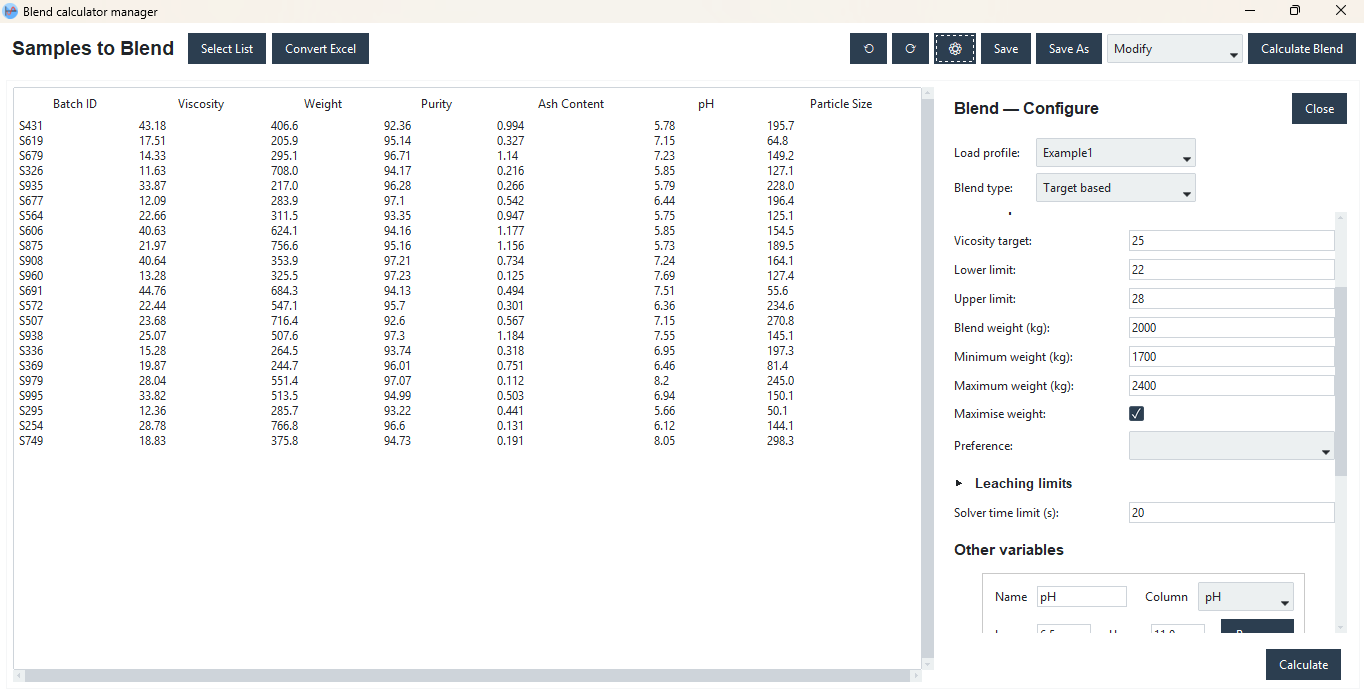
- Load your batch table An Excel file with batch IDs, measured values and weights.
- Set the target and the limits Spec window, weight window, caps on off-spec material. Save them as a profile and reuse them next time.
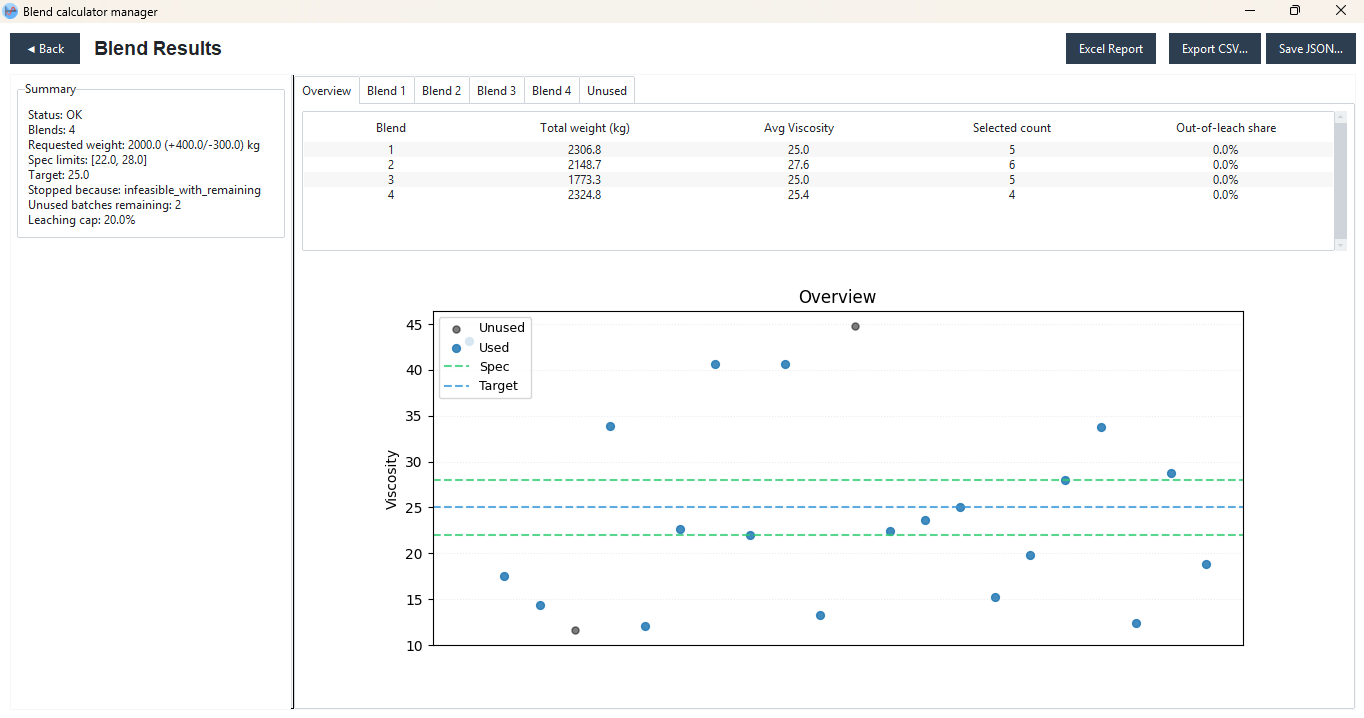
- Calculate It searches the combinations and returns blends that meet every constraint, in seconds.
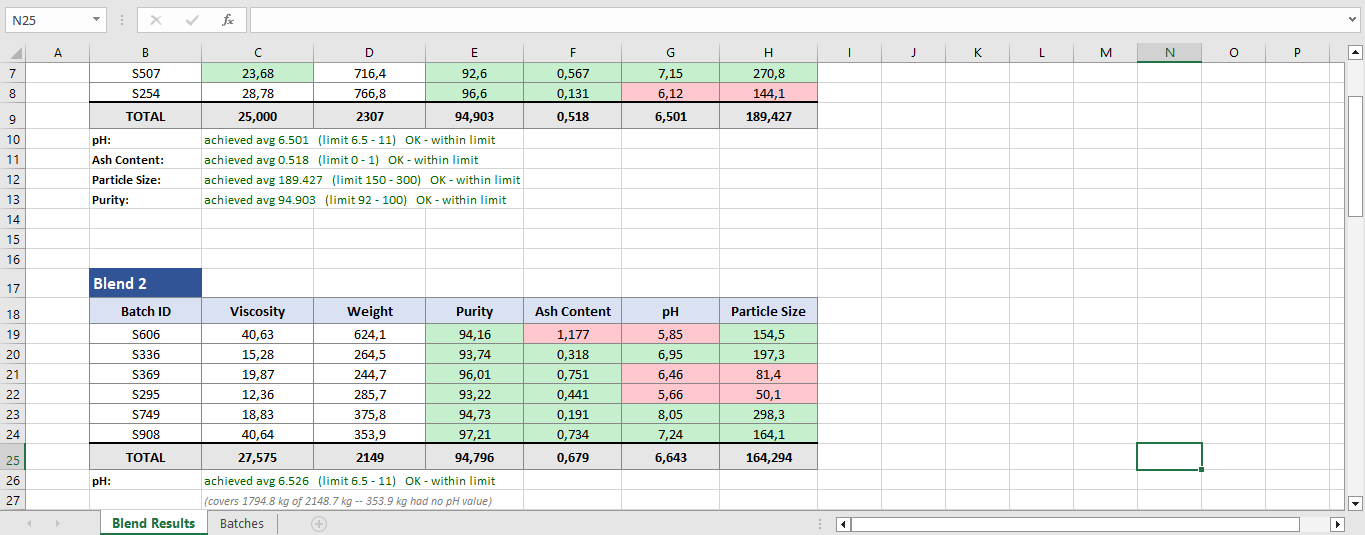
- Check the numbers yourself Every result exports to Excel with the arithmetic visible, so you can verify a blend before anyone runs it.
What to expect
- yesDecision support — it finds and ranks blends that meet your spec, with the working shown.
- yesBuilt around one real process — the constraints are the ones an actual blending operation runs into.
- yesCheckable — every result exports to Excel, so nothing is a black box.
- noNot a replacement for sign-off — your team still confirms a blend before it runs.
- noNot a finished enterprise system — it's early, and built to be shaped by the plants that try it.
What it handles
- spec window
- Upper and lower limits on the property you're targeting — plus any number of other properties that also need to stay within their own limits.
- weight window
- Target weight with tolerances, which can be asymmetric.
- off-spec cap
- A ceiling on how much out-of-limit material a blend may contain, as a share of total weight.
- multiple blends
- Works through your remaining stock, blend after blend, until the batches are used up.
- material use
- Optionally trade a little precision on the target for more of your stock consumed.
- distribution view
- Shows where the mass actually sits, not just the average — two blends can share an average and behave nothing alike.
See it work
Who built it
I am a process engineer working in polymers, and blending batches to hit a spec is a problem I know well from the industry — usually done by hand in Excel, slow, and sometimes close to impossible when the spec and the weight window fight each other.
So I built a tool to handle it properly. It has been tested against real batch data, including cases where the team was struggling to find a workable combination for an awkward material.
Check it yourself
Every blend exports to an Excel file with the batches, weights and resulting values laid out plainly — the same arithmetic the tool used, visible and checkable before anyone runs it.
Your data
Feel free to anonymise batch and product names if you'd prefer. In either case, whatever you send is only ever used to run your blend.